






ATV & UTV Tracks for Fishing
Reach the water when the road runs out — hard water in January, mud in April, and backcountry lakes all summer.
Why anglers run tracks
The spots worth fishing are usually the ones that are hard to reach. That is the whole problem tracks solve.
Get out, and get back
Tracks float your machine over deep snow and slush instead of digging into it. The trip that ends at the landing on tires is a routine ride on tracks.
Pull your shelter
Traction is what turns engine torque into actual movement. Tracks let you haul a loaded sled or hard-sided shack across snow where tires would spin in place.
Fish past ice-out
Access does not end when the ice does. The same flotation that works on snow carries you through spring mud and into remote water all summer.
Through the season
Deep winter
Hard water
The obvious one. Tracks get you and your shelter across snow-covered lakes without the machine bogging down, and let you keep moving when a fresh foot of powder would strand a wheeled quad at the landing.
Shoulder season
Early and late ice
The margins of the season are where access gets hardest and where most anglers give up. Slush on top of ice, drifted approaches, and unplowed access roads all favor tracks — while the ice underneath still demands the same caution as any other day.
Spring
Thaw and mud
After ice-out, the roads and launches to good water turn to mud for weeks. Flotation is exactly what tracks are built for, and it is the season most people forget they own the right tool.
Summer and fall
Remote open water
Backcountry lakes, beaver flowages, and river stretches with no maintained road. If a spot is worth walking a canoe into, tracks will usually get you closer with more gear than you could carry.
Ice thickness guidelines
Minimum recommended thickness for new, clear ice. White or opaque ice is roughly half as strong, so those figures are doubled.
| Activity | New clear ice | White / opaque ice |
|---|---|---|
| Stay off — no travel of any kind | Under 4" | Under 8" |
| Ice fishing or other activities on foot | 4" | 8" |
| Snowmobile or small ATV | 5–7" | 10–14" |
| Side-by-side ATV / UTV | 7–8" | 14–16" |
| Small car or SUV | 9–10" | 18–20" |
| Medium SUV or small truck | 11–12" | 22–24" |
| Medium truck | 13" | 26" |
| Heavy-duty truck | 16–17" | 32–34" |
| Heavy-duty truck with wheelhouse shelter | 20"+ | 40"+ |
Minimum recommended ice thickness by activity, for new, clear ice. Highlighted rows are the machines we sell tracks for. Source: Minnesota Department of Natural Resources
If you are towing, go by total weight
The table above describes a bare machine. Your machine, shelter, gear, and passengers are one combined load on the ice — a mid-size side-by-side towing a hard-sided shack often lands near 5,000 lbs, well past the 7–8 inches the side-by-side row suggests.
| Clear ice thickness | Maximum total load | |
|---|---|---|
| 7" | 2,450 lbs | |
| 8" | 3,200 lbs | Bare mid-size UTV |
| 9" | 4,050 lbs | |
| 10" | 5,000 lbs | UTV towing a loaded shack |
| 12" | 7,200 lbs | |
| 14" | 9,800 lbs | |
| 16" | 12,800 lbs | |
| 20" | 20,000 lbs |
Derived from Gold's formula. You are responsible for knowing what your rig actually weighs. Source: Minnesota Department of Natural Resources (weight guidelines)
Parking is not the same as driving
The thicknesses above assume a vehicle in motion. A machine parked in one place concentrates its weight and the ice begins to creep. A loaded vehicle of 2,200–4,400 lbs needs about 16 inches of effective thickness to sit for more than two hours — roughly double the 9–10 inches it needs to drive across. Park machines at least 50 feet apart and move them every two hours.
No ice is ever completely safe
Ice is seldom uniform across a lake — it can be two feet thick in one spot and an inch thick a few yards away. Current, springs, wind, and snow cover all change it. These figures are guidelines, not guarantees. Measure your own ice as you travel, check local conditions, and never rely on a report from another day or another lake. Running tracks does not exempt you from these guidelines: they are based on the total weight you put on the ice.
Which track system?
Every system here fits thousands of machines. The right one depends on what you drive and how much you drag behind it.
ATV track systems
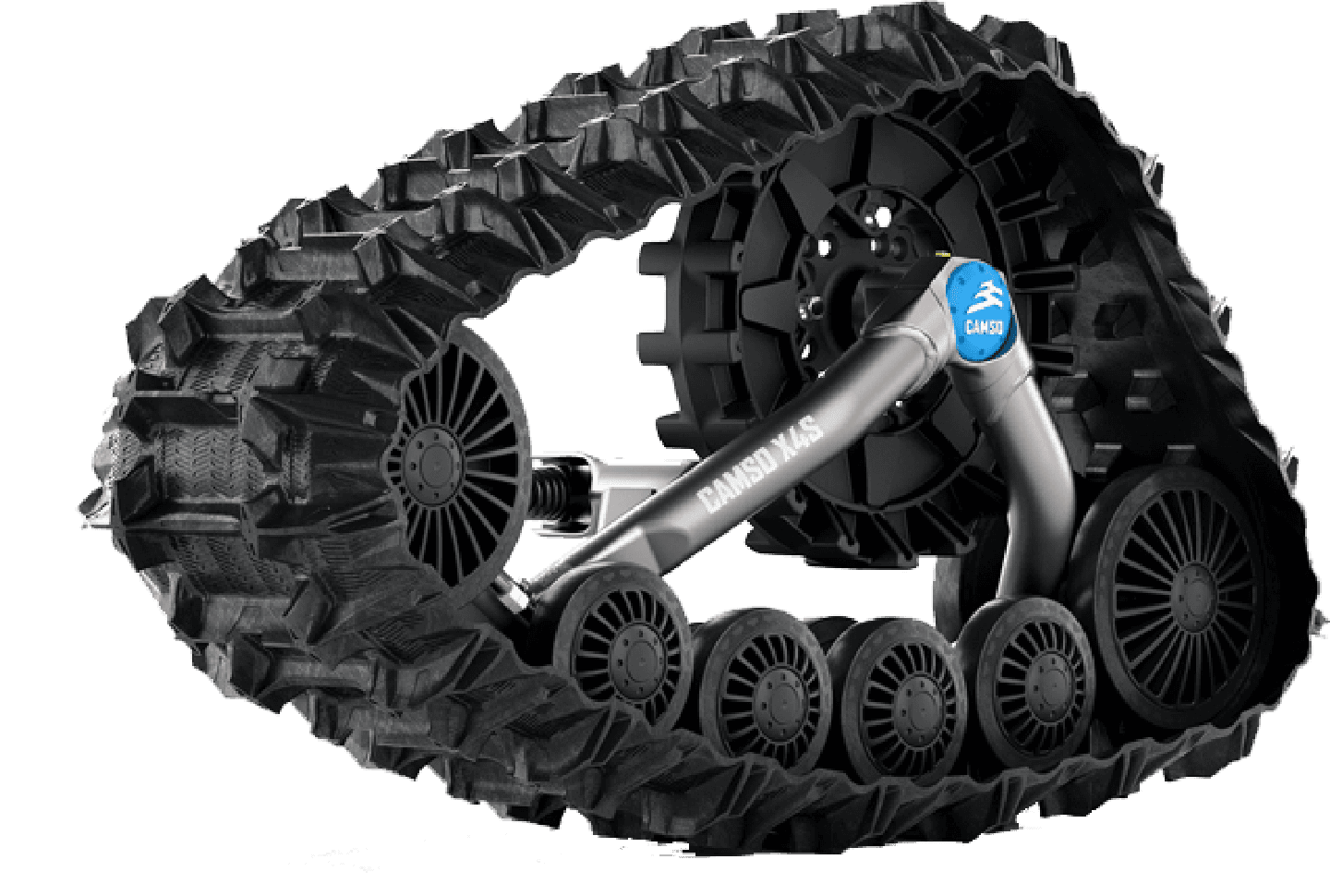
From $5,049
ATV & UTV
All-season pick that fits both ATVs and side-by-sides — hard water in winter, mud and backcountry trails the rest of the year.
See Camso X4S fitments
From $4,599
ATV
The most affordable way onto the ice. Sized for anglers running packed snow to a spot they already know.
See Camso T4S fitments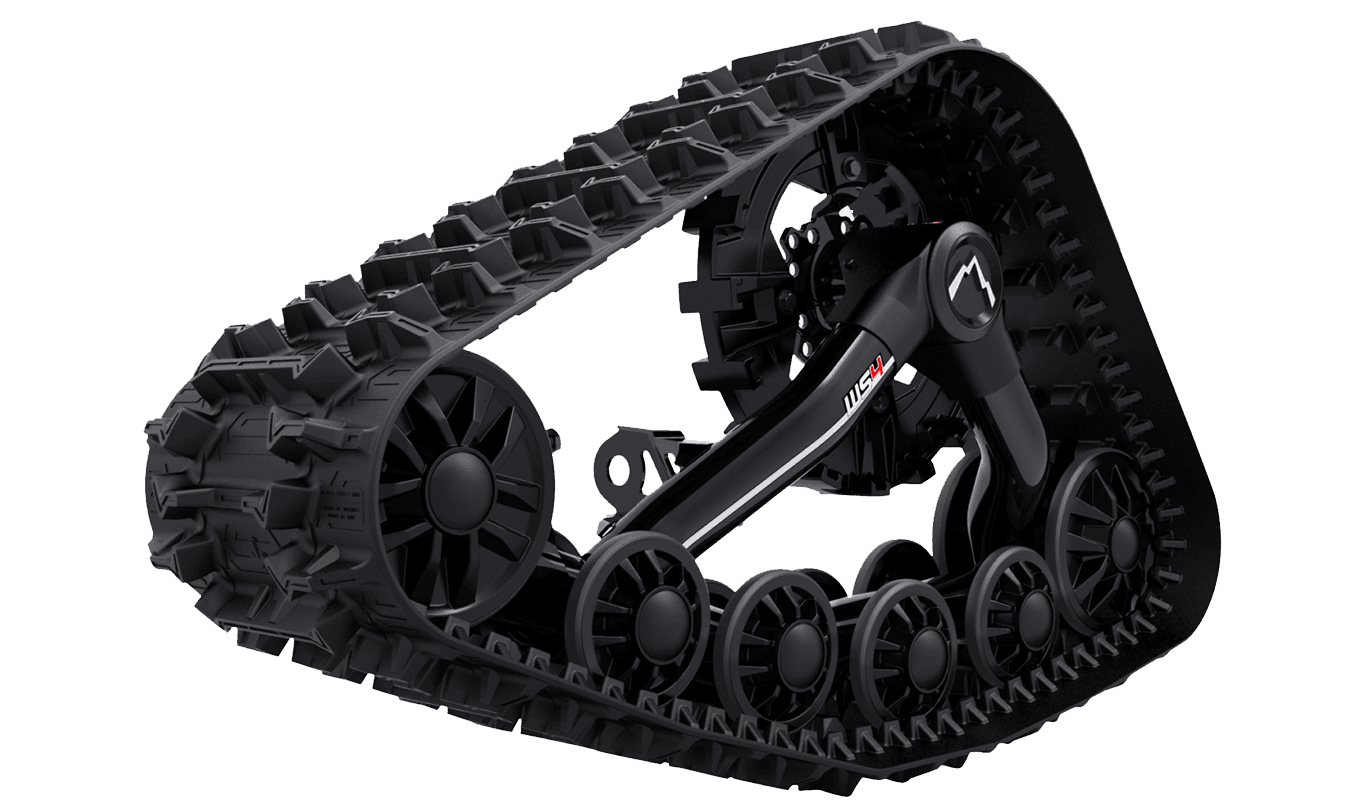
From $4,845
ATV
Fits more ATVs than anything else we carry — 733 machine configurations. The usual starting point if you are new to tracks.
See Kimpex WS4 fitmentsUTV / side-by-side track systems
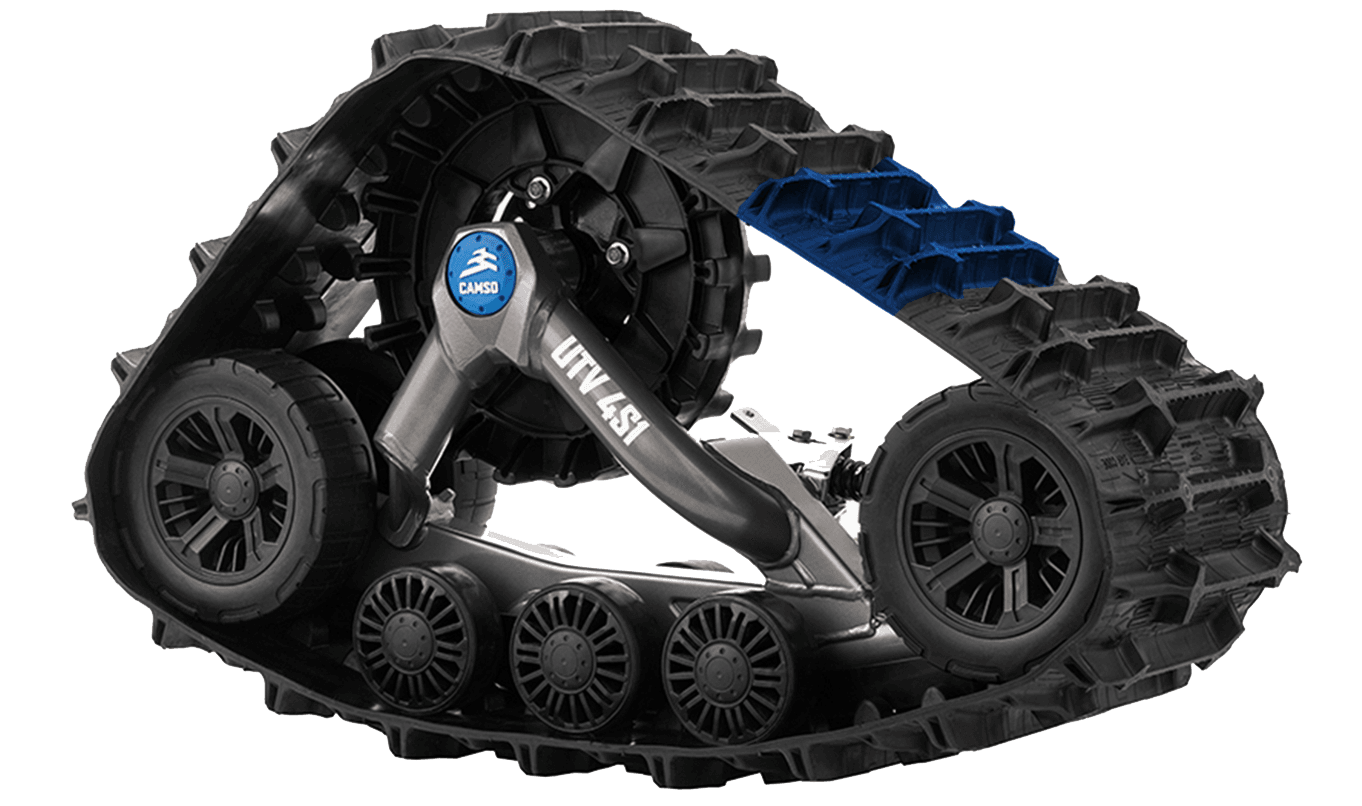
From $6,599
UTV, ATV & 4x4
The workhorse for side-by-side anglers hauling gear, passengers, and a portable shelter.
See Camso 4S1 fitments
From $5,995
UTV
Broad side-by-side fitment at the lower end of UTV pricing. Good general-purpose access.
See Kimpex WSS4 fitments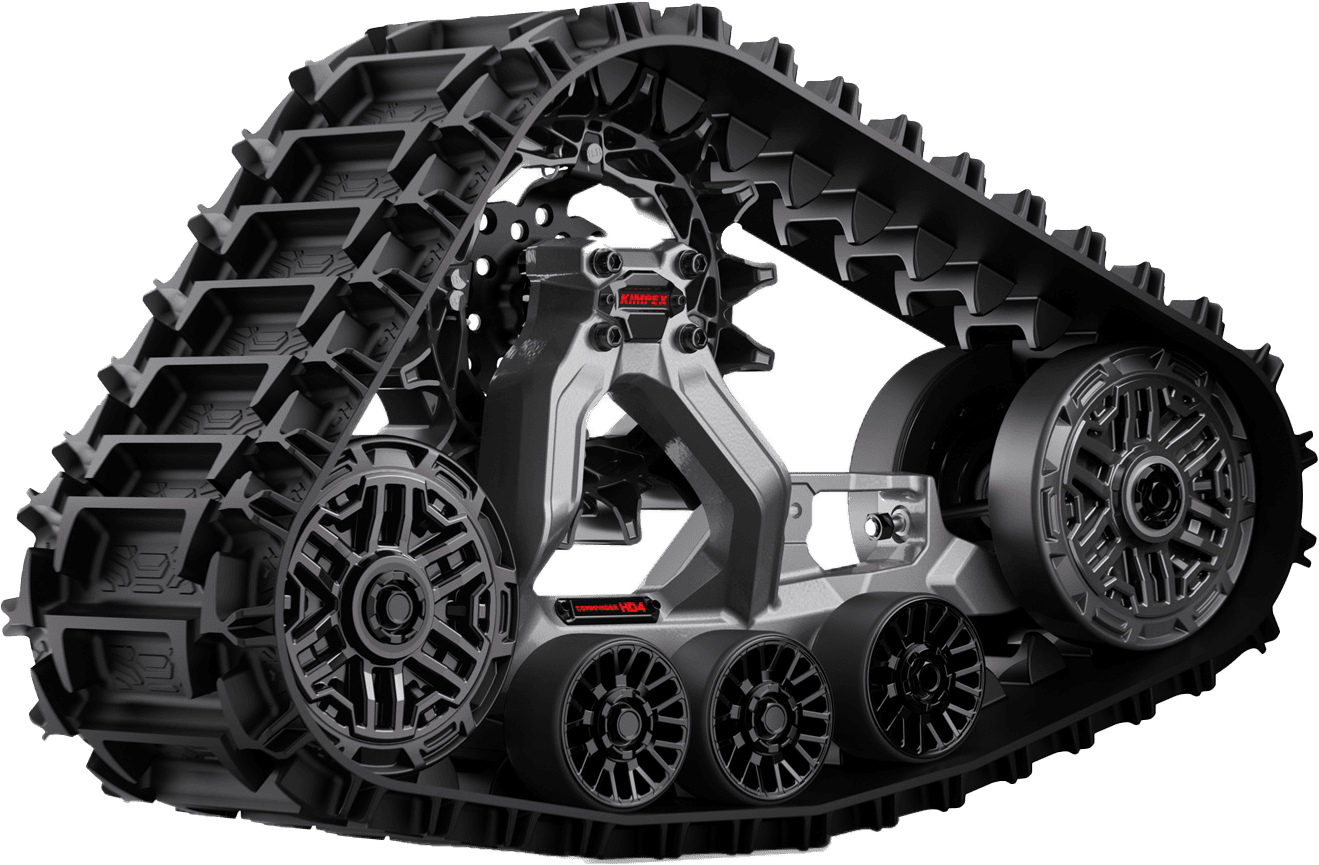
Kimpex HD4
Heavy DutyFrom $12,749
UTV under 4,000 lbs
Heavy-duty build for machines under 4,000 lbs that regularly tow a loaded sled or hard-sided shack.
See Kimpex HD4 fitments
From $12,999
UTV
Camso's heaviest-duty side-by-side system. Currently pre-order with limited fitments — call before you plan a season around it.
See Camso ENDUR fitmentsBefore you head out
A short pre-trip routine that is worth the ten minutes it costs you.
1. Check ice thickness yourself
Drill test holes as you go rather than trusting a report from yesterday or a neighboring lake. Ice varies enormously across a single body of water — current, springs, and pressure ridges all thin it locally.
2. Confirm your loaded weight
Weigh the machine as it will actually travel: tracks, gear, passengers, and anything you are towing. Tracks spread that load over far more surface area than tires, but the total still has to clear the thickness guideline.
3. Set track tension and alignment
Cold stiffens rubber and slack tracks throw more easily. Check tension and alignment before you leave the truck, not after you are a mile out.
4. Pack recovery and safety gear
Ice picks worn on your body, a throw rope, a spud bar for testing, and a charged phone in a waterproof case. Ice picks do you no good in a bag strapped to the rack.
5. Know how you would get out
Enclosed cabs are the hardest to escape, so decide before you drive out: seat belts off and windows or doors open while you are on the ice, and nothing stacked where it would block an exit. The Minnesota DNR publishes a vehicle-escape guide worth reading before your first trip of the season.
6. Tell someone your plan
Leave your lake, access point, and expected return time with someone off the ice. Travel with a partner on separate machines where you can.
Common questions
Are ATV tracks better than tires on ice?
For traction and flotation, yes. Tracks put dramatically more surface area on the ground, which spreads your machine's weight and greatly improves grip in snow, slush, and on snow-covered ice. On bare, polished ice, tracks still outperform tires but no track system makes ice a high-traction surface — brake earlier and steer sooner than you would on dirt.
How much can I tow with tracks on my ATV or UTV?
Your machine's rated towing capacity does not change when you install tracks — that number comes from the manufacturer and you should keep working from it. What changes is how much of that capacity you can actually use on snow and ice, where tires spin instead of pulling. A mid-size UTV rated around 1,500–2,000 lbs of towing can generally handle a portable shelter and gear sled; hard-sided shacks in the 2,000–2,500 lb range are heavy-duty territory, which is what the Kimpex HD4 and Camso ENDUR are built for. Weigh your actual load and call us if you are near the limit.
How thick does the ice need to be for a UTV with tracks?
Minnesota DNR guidelines call for 7–8 inches of new, clear ice for a side-by-side, and roughly double that on white or opaque ice. Tracks spread weight better than tires, but the guideline is based on the total weight you put on the ice, so a tracked machine is not permission to go out on thinner ice. Measure as you travel.
Does parked ice need to be thicker than ice you drive on?
Yes, substantially — and this is the case that matters most for ice fishing, since your machine sits still while you fish. Published thickness figures assume a moving vehicle. A parked load concentrates weight in one spot and the ice slowly creeps under it. A loaded vehicle of 2,200–4,400 lbs needs roughly 16 inches of effective thickness to sit for more than two hours, against the 9–10 inches it needs to drive across. Park machines at least 50 feet apart and move them every couple of hours.
Can I leave tracks on year-round for summer fishing access?
Yes. Many anglers run tracks well past ice-out to reach boat launches and shorelines that are too soft for tires during spring thaw. Tracks excel in mud, sand, and marshy ground. Expect reduced top speed and higher fuel consumption compared with tires, and note that most track systems are not intended for extended pavement travel.
Do I need studded tracks for ice fishing?
For most anglers on snow-covered lakes, no. Studs matter most on bare, wind-polished ice or when working slopes and steep launch ramps. Since studs affect track wear and may be restricted in some areas, call us with your typical conditions and we will tell you honestly whether they are worth it for you.
Will tracks fit my machine?
We carry track systems for thousands of ATV and UTV configurations from Camso and Kimpex. Fitment depends on your exact year, make, and model, and each system needs the matching install kit. Use our fitment tool or call and we will confirm the right kit for your machine before you buy.
Same machine, other jobs
More from the field
Watch
This is Boondocking ATV Tracks
Camso Tracks in Deep Snow ATV tracks
ATV and QUAD Tracks - Deep Snow Riding
Not sure what fits your machine?
Tell us what you drive and how you use it. We will confirm the right track system and install kit before you spend a dollar.
(866)243-8359