Which UTV track system fits my side-by-side?
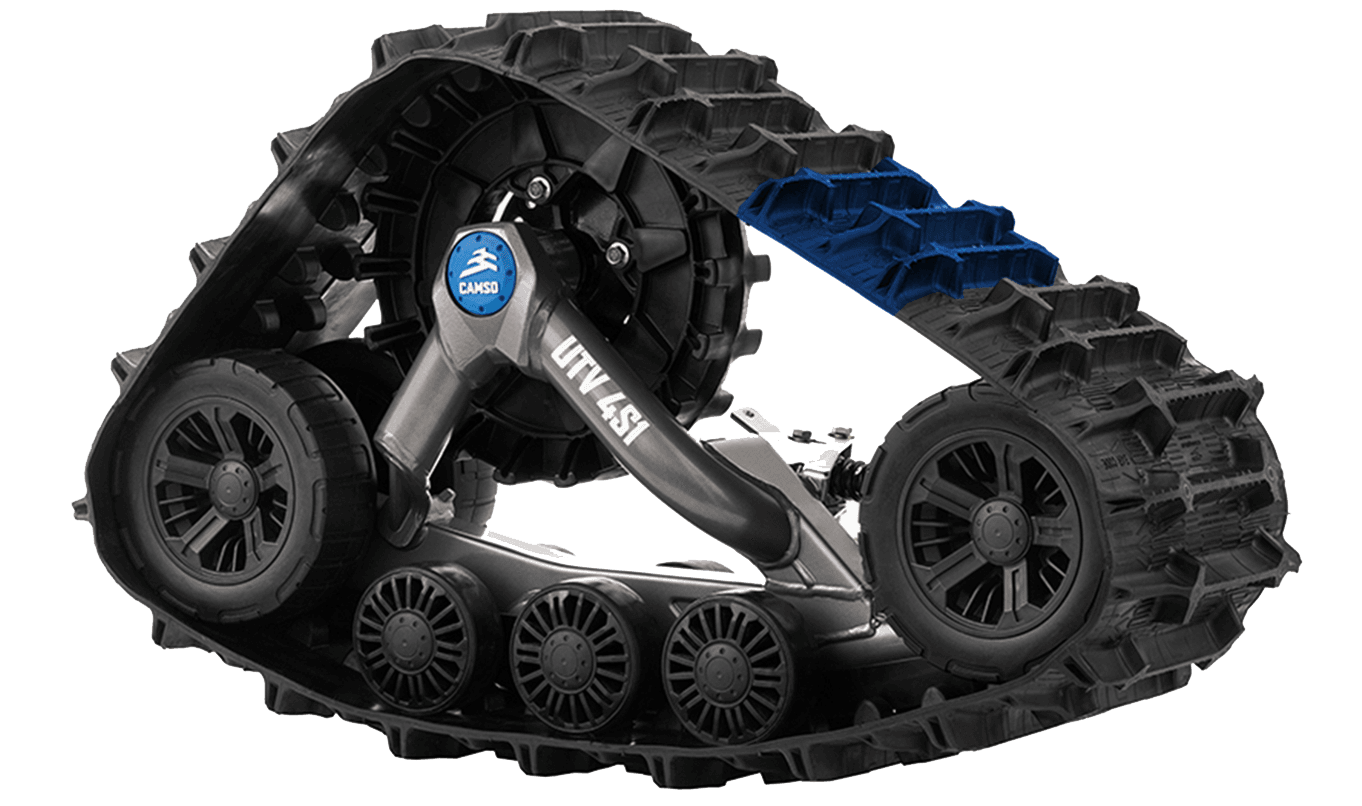
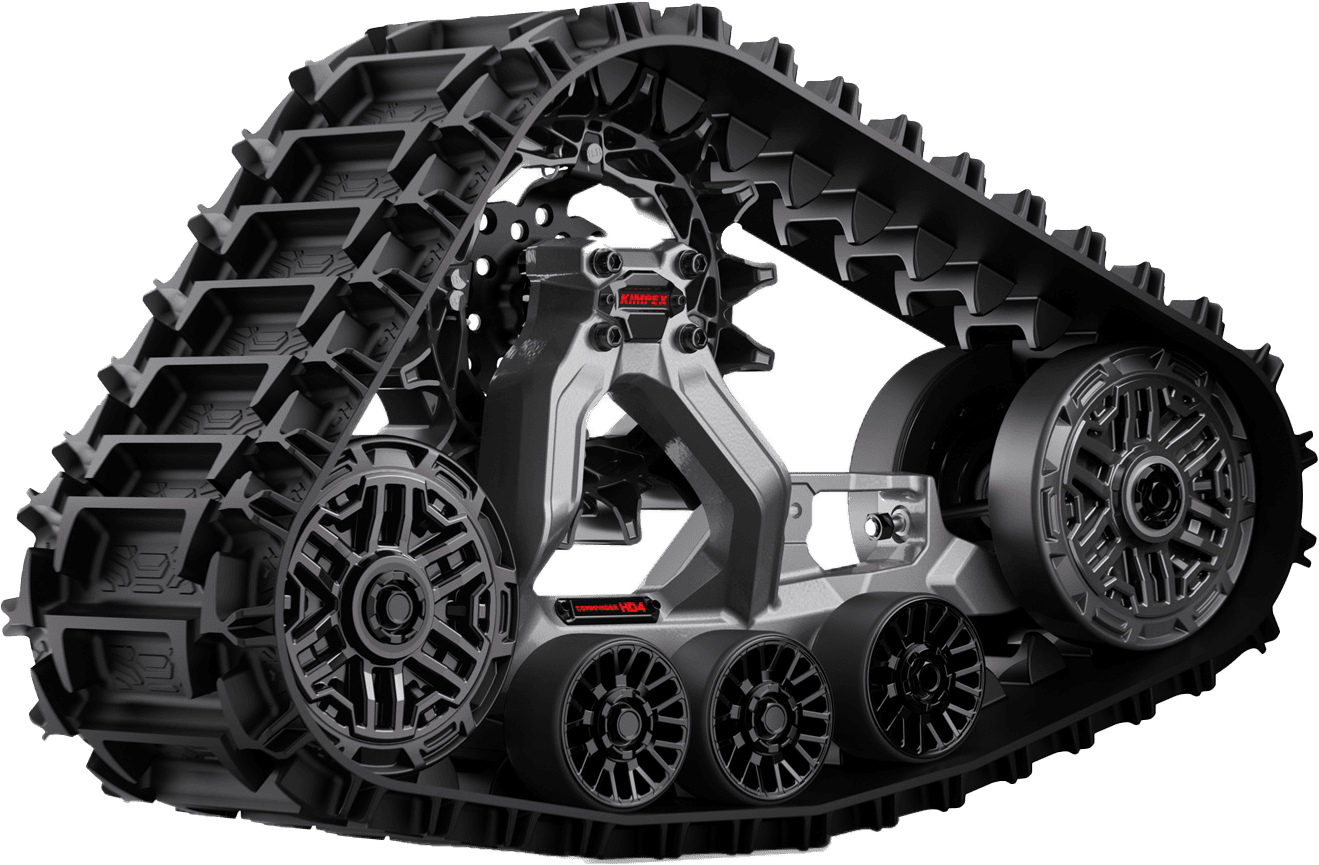
It depends on the make, model and year of your machine and the mount kit the manufacturer publishes for it. As a starting point: the Camso UTV ENDUR is for large side-by-sides of 1000cc and up, the Kimpex HD4 is rated for machines up to 4,000 lb, the Camso 4S1 covers full-size machines of roughly 400 to 1000cc, and the Kimpex WSS4 is bounded by Kimpex’s published fitment list. Size alone does not settle it — run your exact machine through the fitment tool on this page, or call us and we will confirm the system and the mount kit before you order.
What is actually included when I buy UTV tracks?
A complete install is the four track units plus a vehicle-specific mount or attachment kit, front and rear anti-rotation components, and on some machines additional spacers or hub hardware. What ships with a given order depends on the system and your machine, so check the product page for the system you are considering, or call us and we will confirm the full parts list against your exact vehicle. It is the single thing customers are most often surprised by.
How much do UTV tracks cost?
The systems on this page start between roughly $6,000 and $13,000 depending on the system, and the product pages carry the current starting price. What moves the number is the size of machine the system is built for, the size of the footprint, and whether it is an all-around or a heavy-duty build. Budget the vehicle-specific mounting components on top of the system price rather than treating the starting price as the delivered price.
Do UTV tracks reduce speed?
Yes, and it is not a small change. Kimpex publishes an average speed loss of about 30% for the HD4 and about 35% for the WSS4 against tires; Camso publishes an average maintained speed of about two-thirds of tire speed for the 4S1. Those are planning averages, not specifications — the real figure depends on your machine, its gearing, the load and the ground. Most owners run in low range in deep conditions.
Are UTV tracks hard on a transmission or CVT?
Tracks add rotating weight and drag, which means more load on the belt, clutch and driveline than the same machine sees on tires. Properly fitted systems are designed to work within that, and the practical answer is operational: run low range in deep or heavy conditions, keep sustained speed down, avoid long stretches of hard surface, and check what your vehicle manufacturer says about track use on your specific model before you fit them.
Can I switch back to tires when the snow is gone?
Yes. Every system here is designed to come off and go back on seasonally, which is why the vehicle-specific mounting hardware is a separate part of the install. Plan a couple of hours for the first changeover and less once you know your machine. Keep the mount hardware together and labelled — it is machine-specific, and it is what people lose between seasons.
Can UTV tracks be used outside of snow?
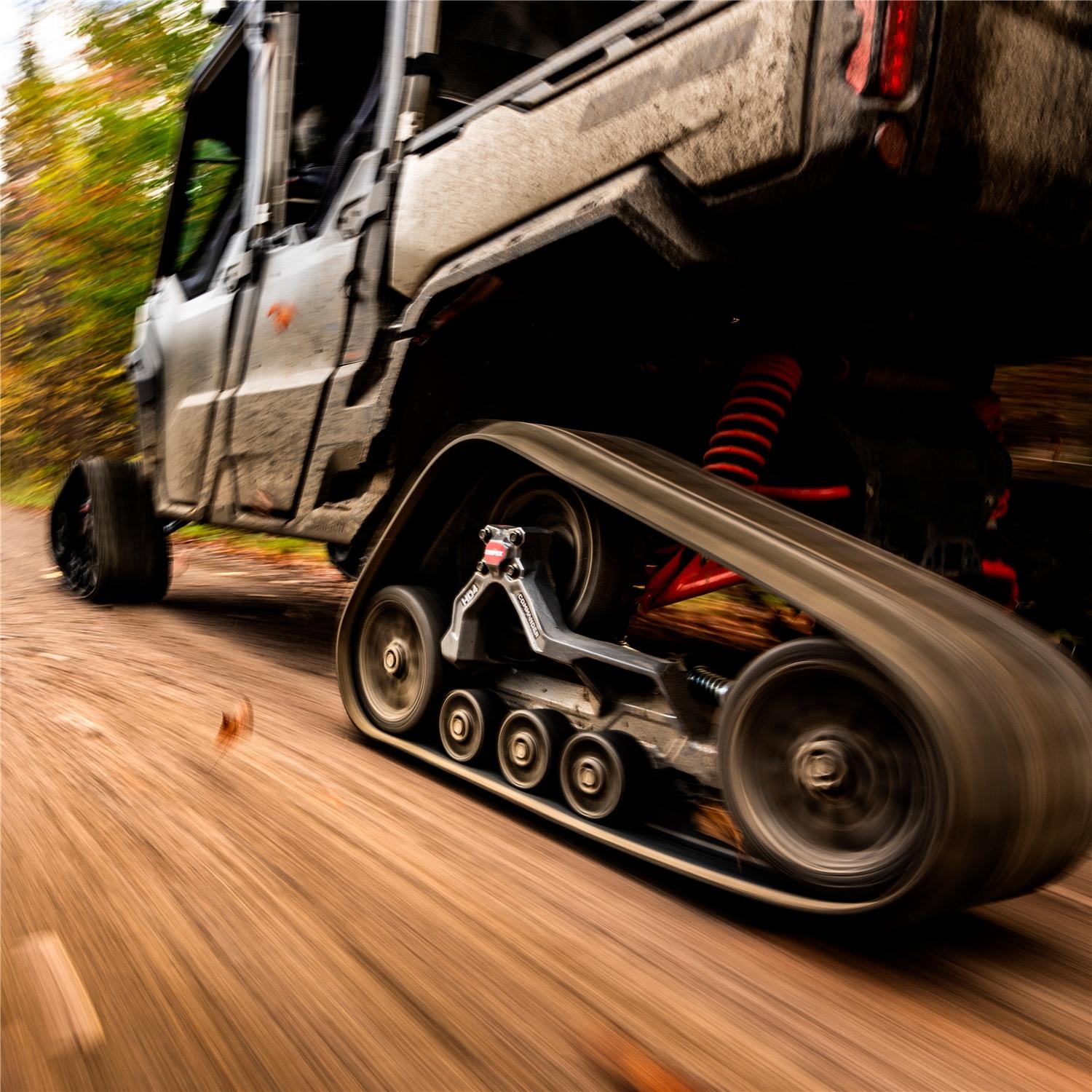
Yes. Both brands build their current UTV systems as all-season equipment, and owners run them through mud, marsh, muskeg, sand and soft summer ground as much as snow. What shortens a rubber track’s life is sustained running on hard, abrasive surfaces such as pavement and gravel, and sustained high speed. Getting across a road is fine; running down one all day is what kills a track early.
Can I plow snow or haul with UTV tracks?
Plowing is one of the most common reasons people buy them, and the traction and pushing power of a tracked machine is a real improvement over tires on a slick driveway. Hauling and towing improve for the same reason: the machine keeps moving where tires would spin or sink. What tracks do not do is raise what your machine is rated to carry or pull — go by the vehicle manufacturer’s own limits for that. Tracks change the traction, not the payload.
Are UTV tracks street legal?
Generally not, and it varies. Rules on operating a tracked side-by-side on a public road are set by state and local authorities and differ from one jurisdiction to the next, so check the rules where you actually ride before you assume anything. Separately from the law: sustained pavement running is what wears a rubber track out fastest, so even where it is permitted it is not what the equipment is for.
Can I move my tracks to a different UTV?
Often, but never by just unbolting them. The track system itself may carry over if the new machine is in the class the system is rated for. What changes is the mount kit, which is built for a specific make, model and year, and depending on the two machines hub, sprocket or suspension components may change as well. Tell us the machine the system is on now and the one you want it on, and we will confirm whether the transfer works and price the exact parts list.